
Words for how you feel.

Understand your gender identity.
138 identities in plain words, 93 side-by-side comparisons, and a free test that suggests. You decide.

Wherever you are in this.
 Take the test
 Explore identities
 Compare terms
A shortlist, not a verdict.
Nothing here can know your gender. It listens to what you said and hands you the words worth reading next.
Take the test — free & anonymous- 1
Answer 20 questions
Short, concrete prompts about how you feel in your body, in language, in clothes and in groups. No trick questions.
- 2
We listen for six things
How steady it feels, how strongly, how it sits with your body, with words, with other people. Six threads, kept separate.
- 3
You get a shortlist
Not one answer. A handful of words that sound like what you described, and why each one turned up.
- 4
You read and decide
Every suggestion links to a full guide so you can check it against your own life. The label is always your call.
Scored in your browser. Your answers never leave your device.


Nine categories. 138 identities.
Start where it feels closest to you. You can wander from there.

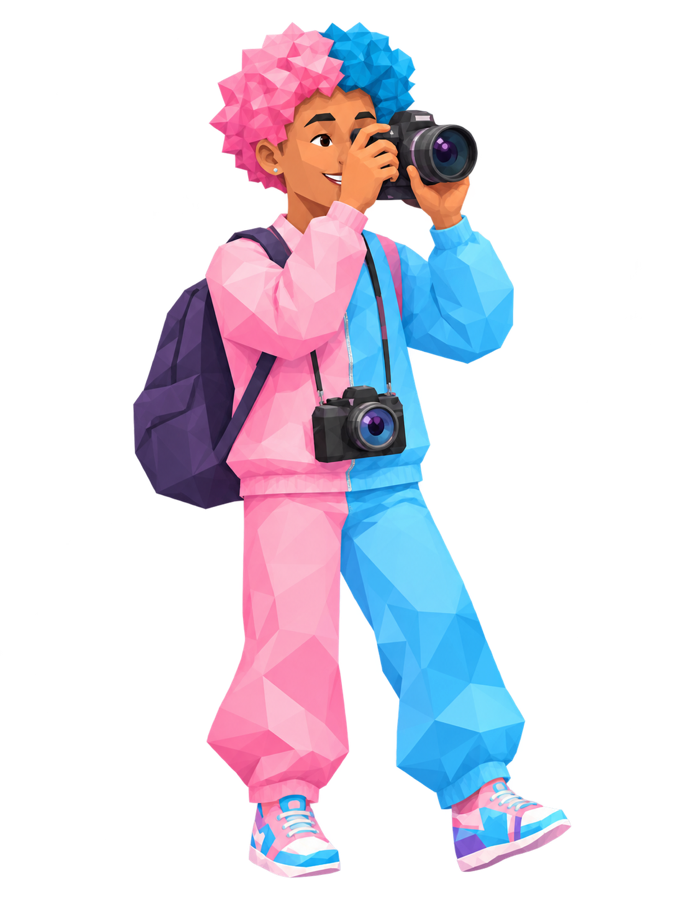

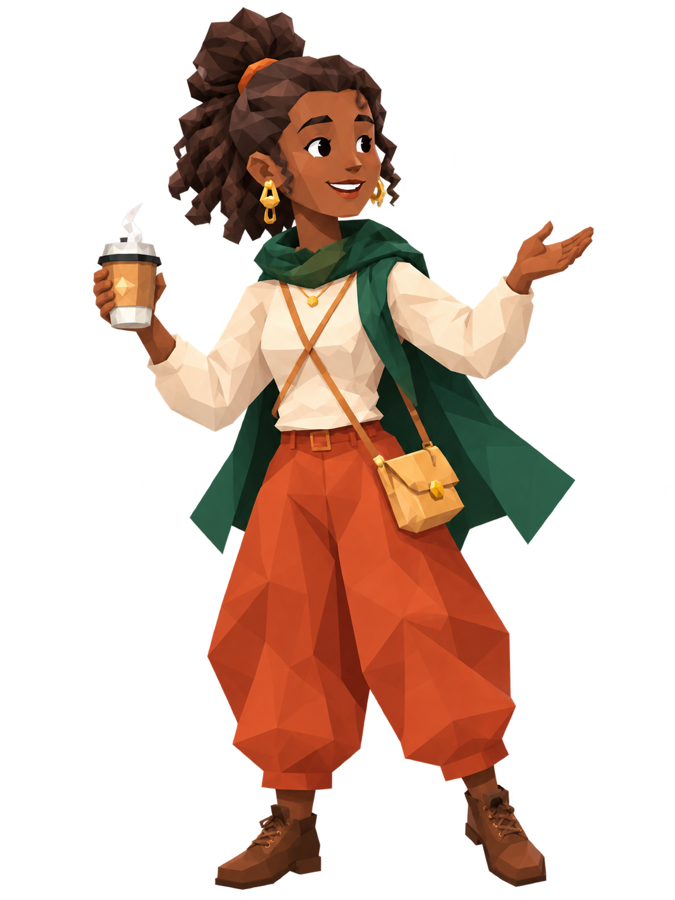



Close words. Clear differences.
93 pairs, written out side by side: what they share, where they part, how to tell which is closer.
Agender vs Non-Binary
Non-binary says your gender is not man or woman; agender says there is no gender there at all — a blank rather than a different shape.
Read the comparisonGenderqueer vs Non-Binary
Non-binary says where you sit, outside man and woman; genderqueer says how you feel about being asked, with a political edge the plainer word leaves off.
Read the comparisonGenderflux vs Genderfluid
Genderfluid changes which gender you are; genderflux changes how much of it there is — station versus volume.
Read the comparisonEvery flag we could verify.
35 of the 138 identities have a flag we could trace to a source: who made it, and when. The other 103 get an honest blank.
See all 37 flags35 with a flag on record103 left blank, on purpose

Four things people mix up.
Not your body, not your clothes, not who you love. Almost every argument about gender starts by confusing these four.
Gender identity
Your internal sense of your own gender. Only you have access to it, and it can stay the same your whole life or shift over time.
Gender expression
How you present outwardly — clothes, hair, voice, body language. Expression often signals identity, but it does not define it.
Sex assigned at birth
A label given by a doctor based on visible anatomy. It is a starting point on a form, not a conclusion about who you are.
Sexual orientation
Who you are attracted to. Entirely separate from gender identity, though the two are frequently confused.

The questions people actually ask.
17 long reads for what a definition can’t cover.
All 17 guidesThe difference between identity, expression, sex assigned at birth and orientation — in plain words, with examples.
13 min readEducationGender expression vs gender identity: the differenceOne is what you are, the other is what people can see. Where the confusion starts, and what it costs.
12 min readIdentityGenderfluid identity: when your gender changesWhat it is like when the thing underneath moves — pronouns, wardrobes, jobs, and the weeks you cannot read yourself.
14 min readSelf-DiscoveryAm I non-binary? 15 signs, and what to do nextThe signs that usually get left out: the forms, the money, and the weeks where nothing feels like progress.
10 min readComing OutComing out as transgender or non-binaryWhether to say it at all, who gets it first, what to have in place, and what to say back when it goes wrong.
14 min readGuideNeopronouns explained: ze, xe and beyondWhat they are, where they came from, how to learn a set, and what to do in the three seconds after a slip.
11 min read
Asked often, answered plainly.
Short answers. Nothing dressed up, nothing dodged.
What is gender identity?
It is the sense you have of your own gender from the inside — man, woman, both, neither, or something with no tidy name. It is not the same as the body you were born with, and not the same as who you fall for.
Is gender identity the same as sexual orientation?
No. Gender identity is who you are; sexual orientation is who you are drawn to. A person of any gender can be straight, gay, bi, asexual or anything else — the two are answered separately.
Can an online test tell me my gender?
No, and this one does not try. It listens to how you answered and hands back the words that sound closest to what you described, with the reasons. Whether any of them is yours is your call.
What if none of the labels feel right?
Then none of them is yours yet, and that is a real answer. Plenty of people use a broad word, change words over the years, or never adopt a label at all.
Is the test anonymous?
Yes. No account and no email. The scoring runs in your browser, and your answers and result stay on your device until you clear them.

Not sure where you fit?
That’s exactly what this is for. 20 questions, 4 minutes, no account — and a reading list instead of a label you didn’t choose.
Take the test- Private by designNo account, no email. Your answers never leave your browser.
- Sourced and datedFlags and facts trace to a record, and corrections carry a date.
- Free to readThe whole library, and your test result, cost nothing.